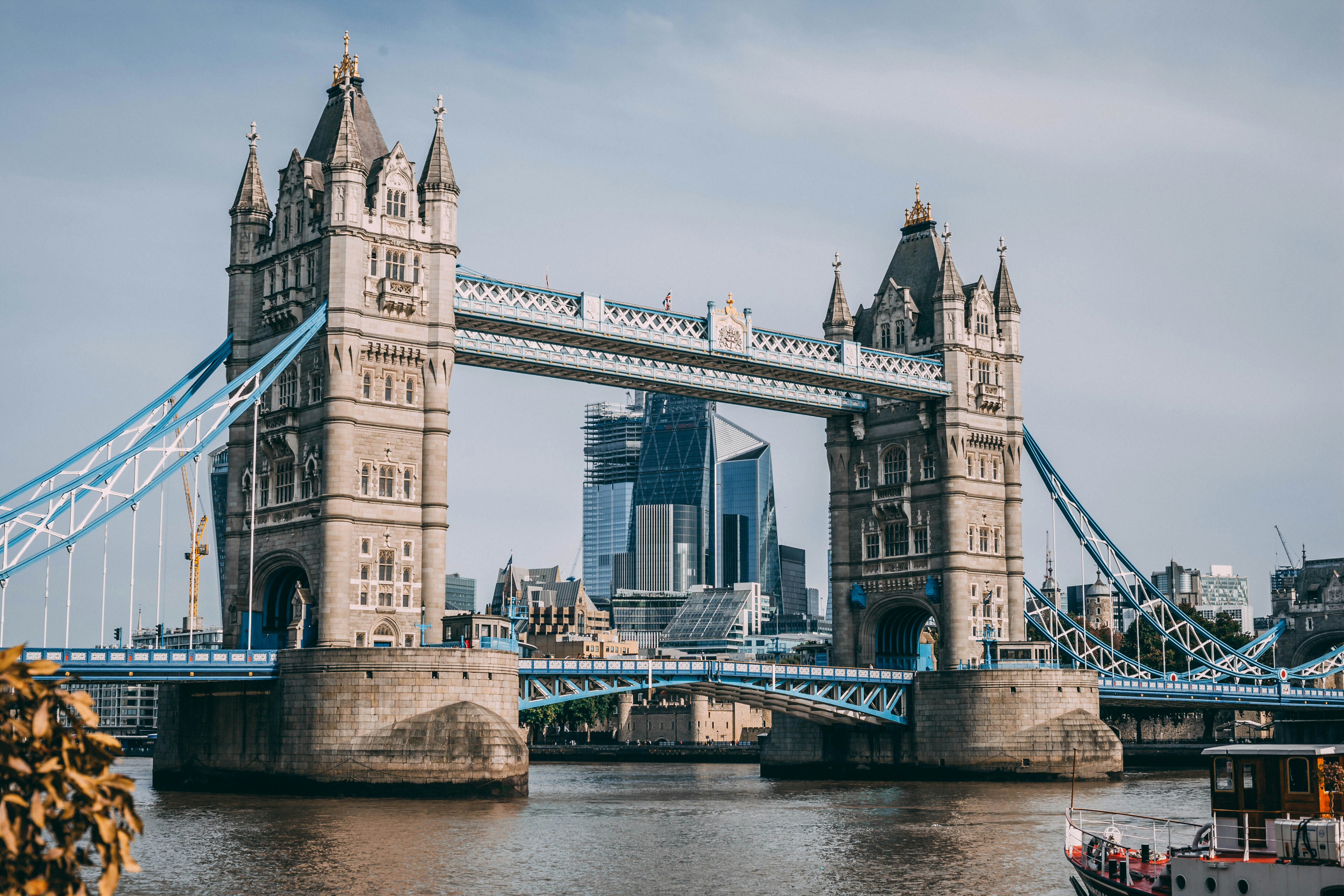
Buying repossessed property in London
See the story behind every listing. Cancel any time in the trial.
London is not one housing market. It is a conurbation of 33 local authorities: 32 boroughs plus the City of London. Each one reports its own repossessions. Each one sets its own licensing rules.
Across that conurbation, repossessions run at 3.04 per 1,000 households. That is 304 per 100,000. The rest of England averages 109 per 100,000. London's rate is nearly three times higher.
Those repossessions sit inside a housing stock of 3,822,330 dwellings. That is the largest housing stock of any city region in the UK. Most people don't know the rate swings more than tenfold between boroughs.
This guide covers the numbers, the boroughs and the buying process for repossessed property in London. Plain English. No padding.
Part of our city-by-city guides to buying repossessed property in the UK.
How many repossessions are there in London?
London's repossession rate was 304 per 100,000 households in 2025 (Trust for London, using Ministry of Justice and ONS data). The figure counts county court bailiff repossessions, mortgage and landlord combined. Only four areas sat below the rest-of-England average: the City of London, Kensington and Chelsea, Hammersmith and Fulham, and Richmond upon Thames.
Measure | London | Rest of England |
|---|---|---|
Repossessions per 100,000 households (2025) | 304 | 109 |
Highest borough: Newham | 824 | – |
Second highest: Barking and Dagenham | 736 | – |
Lowest borough: Kensington and Chelsea | 72 | – |
Boroughs at or above their 2019 rate | 21 | – |
Here's what that looks like on the ground. A household in Newham is more than ten times as likely to face repossession as one in Kensington and Chelsea. Same city. Very different market.
Repossessions per 100,000 people, by borough
A second measure uses population, not households. On that basis, eight of the ten highest repossession rates in England were London boroughs in Q3 2024 (Lawhive analysis of MoJ data, via Property Reporter). The other two were Luton and Slough.
Borough | Repossessions (Q3 2024) | Per 100,000 people |
|---|---|---|
Enfield | 186 | 55.7 |
Newham | 186 | 51.9 |
Barking and Dagenham | 105 | 47.7 |
Haringey | 118 | 45.1 |
Croydon | 173 | 44.1 |
Hillingdon | 121 | 39.7 |
Barnet | 151 | 38.8 |
Redbridge | 120 | 38.6 |
For scale, Manchester recorded 23.8 per 100,000 people in the same quarter. Enfield's rate was more than double that.
Mortgage claims point the same way. In April to June 2026, London boroughs held eight of the ten highest mortgage possession claim rates in England and Wales. Westminster topped the list at 344 claims per 100,000 mortgaged households (Ministry of Justice, Apr–Jun 2026).
London's housing stock: 3.8 million homes
London has 3,822,330 dwellings (2024). Spread across 33 authorities, that is an average of around 116,000 homes per borough. A stock this size produces a steady flow of repossessed property, even in quieter years.
Measure | Figure | Year |
|---|---|---|
Total dwellings | 3,822,330 | 2024 |
Council tax properties | 3,813,790 | 2024 |
Households | 3,629,706 | 2023 (projection) |
Population | 8,945,309 | 2023 |
Local authorities | 33 (32 boroughs + City of London) | – |
Vacant dwellings | 93,602 (2.45%) | 2024 |
Long-term vacant dwellings | 38,386 (1.0%) | 2024 |
Net additional dwellings | 32,162 | 2023/24 |
Private rented share of homes | Nearly 30% (about 1.1 million) | 2021 |
Social rented share of homes | 22% (about 800,000) | 2021 |
Average price | £553,000 (UK £270,000) | April 2026 |
Sources: Open Innovations housing data (GOV.UK Table 125, VOA, ONS); Centre for London; UK House Price Index, April 2026.
Here's what the stock tells a buyer of repossessed property in London:
- Renting is the norm. Less than half of Londoners own their home. Private renting has nearly doubled its share since 2002. Landlord possessions make up a large part of the flow.
- Prices are double the UK average. London averages £553,000. Prices fell 2.1% in the year to April 2026, while UK prices rose 3.8%.
- Outer boroughs carry the volume. The highest repossession rates sit in outer east, north and south London, not the centre.
- Empty homes are rare. Only 1% of stock is long-term vacant. Repossessed homes are re-let or re-sold quickly.
London is a conurbation: search it borough by borough
Treat London as 33 separate markets that share a skyline. Repossession data, council tax, landlord licensing and planning are all set borough by borough. A search for "London" hides that detail.
- Data is reported per borough. Ministry of Justice figures come out at local authority level. There is no single London-wide feed of repossessed homes.
- Licensing differs by borough. Newham runs borough-wide landlord licensing. Neighbouring boroughs run different schemes. Check before you buy anything tenanted.
- Inner and outer London behave differently. Inner boroughs have more leasehold flats and higher prices. Outer boroughs have more houses and higher repossession rates.
- The commuter belt is outside the figures. Luton, Slough, Dartford and Thurrock sit beyond the Greater London boundary. Their repossessions do not count in London's totals.
Where to find repossessed homes in London
Repossessed houses in London follow the borough map. Here's where the highest rates sit, and what each area typically offers.
Borough | Postcodes | Typical repossessed stock |
|---|---|---|
Newham | E6, E7, E12, E13, E15, E16 | Victorian terraces and new-build flats around Stratford and the Royal Docks. |
Barking and Dagenham | IG11, RM8, RM9, RM10 | Ex-council houses and terraces at the lower end of London prices. |
Enfield | EN1, EN3, N9, N18 | Terraces, semis and ex-council flats. |
Haringey | N15, N17, N22 | Terraces and converted flats. |
Croydon | CR0, CR7 | Town-centre flats and suburban semis. |
Redbridge | IG1, IG2, IG3 | Terraces and semis. |
Barnet | EN5, N12, NW9, HA8 | Semis and purpose-built flats. |
Hillingdon | UB3, UB4, UB8, UB10 | Semis and maisonettes. |
How repossessed property reaches the market in London
- Estate agent listings. Lenders instruct local agents in each borough. Listings rarely say "repossessed". Look for "sold on behalf of the mortgagee" or "mortgagee in possession".
- London property auctions. London auction houses sell lender and receiver lots every month. Legal packs are online before the sale.
- LPA receiver and fixed charge receiver sales. Receivers sell buy-to-let flats for lenders. With nearly 30% of homes privately rented, these are common in London. Many sell tenanted.
- Bank and lender asset managers. Some lenders use specialist asset management firms rather than high-street agents.
- Deal feeds. Platforms like Repolist track repossession, receiver and auction listings across all 33 authorities in one place.
How to buy a repossessed house in London: step by step
Buying repossessed property in London follows the normal conveyancing route. The seller is different. At London prices, every step costs more if it goes wrong.
- Get your funding in place first. Lenders favour proceedable buyers. Have a mortgage agreement in principle or proof of cash. Auction buyers need bridging finance or cash for completion, usually within 28 days.
- Pick your boroughs. Do not search London as a whole. Choose two or three boroughs and learn them properly.
- View the property in person. Repossessed homes are often empty for months. Check for water damage, stripped boilers, missing kitchens and damp.
- Read the legal pack or ask for the title. Most London repossessions are leasehold flats. Check lease length, ground rent, service charges and any sitting tenant.
- Check the borough's licensing rules. A tenanted home may need a selective or HMO licence. Fines for unlicensed lettings fall on the owner.
- Commission a survey. A Level 2 survey suits most flats. Use a Level 3 for period conversions or damaged homes.
- Make your offer in writing. The selling agent must pass every offer to the lender. Lenders have a duty to get the best price reasonably obtainable. Expect the home to stay on the market until exchange.
- Move fast to exchange and insure. Gazumping is common with repossessions. Insure from exchange. Empty homes need specialist unoccupied cover.
Are repossessed houses in London cheaper?
Sometimes. Not always. Lenders must aim for market value. Discounts usually reflect condition, lease problems, speed or tenancy. At London auctions, competition can push prices above the guide.
Risks and tips for London buyers
The main risks are leasehold costs, licensing and condition. Here's what to check.
Risk | What to check in London |
|---|---|
Short leases | Leases under 80 years cost more to extend. Some lenders will not lend on them. Get a lease extension quote early. |
Cladding and fire safety | Many London blocks are affected. Ask for the EWS1 form and remediation status. |
Service charges and arrears | Lenders sell flats with arrears outstanding. Ask the managing agent for the current account. |
Borough licensing | Rules differ across the 33 authorities. Check the council's selective and HMO licensing maps. |
Sitting tenants | Receiver sales are often tenanted. Check the tenancy agreement, deposit protection and rent paid. |
Condition | Empty homes leak and get stripped. Budget for a refurb until the survey says otherwise. |
Auction fees | Buyer's premiums and admin fees sit on top of the hammer price. Read the special conditions. |
One more tip. Track the same borough for a few months before you buy. You learn what repossessed stock actually sells for, not what it is guided at.
Frequently asked questions
How many repossessions are there in London?
London recorded 304 repossessions per 100,000 households in 2025. The rest of England averaged 109. The figure counts mortgage and landlord repossessions by county court bailiffs.
Which London borough has the most repossessions?
Newham had the highest rate in 2025, at 824 per 100,000 households. Barking and Dagenham was second at 736. Measured per person in Q3 2024, Enfield ranked first.
How big is London's housing stock?
London has 3,822,330 dwellings (2024) across 33 local authorities. Nearly 30% of homes are privately rented.
Why is London called a conurbation?
London is a continuous urban area made up of 32 boroughs and the City of London. Each authority runs its own council services, licensing and data. Repossession rates differ sharply between them.
Where can I find repossessed property in London?
Check estate agents acting for lenders, London property auctions, LPA receiver sales and lender asset managers. A deal feed like Repolist brings these sources together across every borough.
What should I check on a repossessed flat in London?
Check lease length, service charges and cladding status before you offer. A low price can hide high long-term costs.
Can I get a mortgage on a repossessed house in London?
Yes, if the property is mortgageable. Short leases, cladding issues or missing kitchens can rule out standard lenders.
Find repossessed property in London with Repolist
London combines a repossession rate nearly three times the rest of England with 3.8 million homes. Across 33 authorities, that is a constant flow of repossessed houses and flats. The skill is knowing which borough, and what each deal is really worth.
Repolist tracks repossessions, receiver sales and auction lots across every London borough. Every deal comes with the context to judge it. Start your free 7-day trial at repolist.co.uk.
This guide is for information only. It is not financial or legal advice. Always take independent advice before buying property.